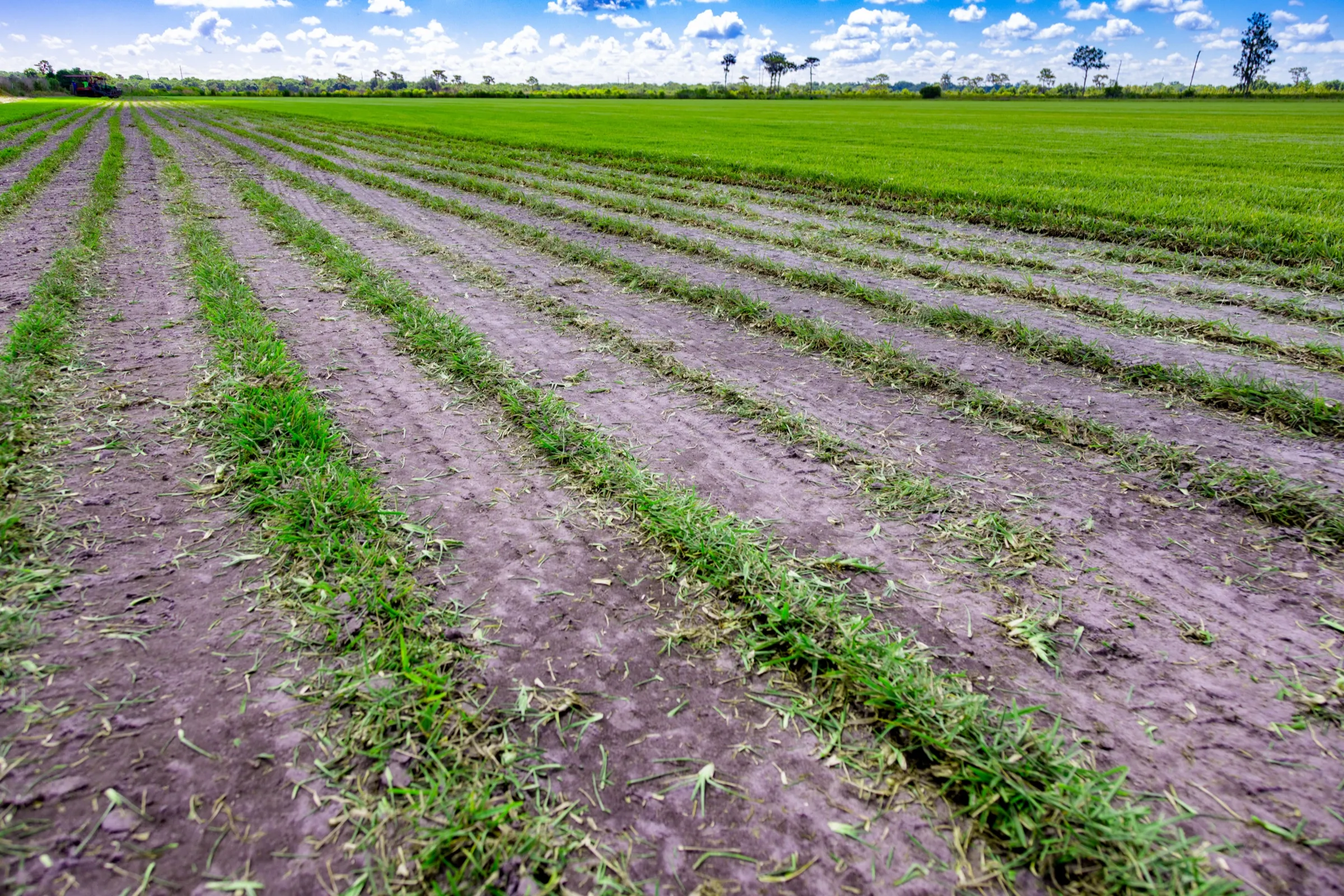
The Gulf Coast has had three lessons in this since 2022: Hurricane Ian on September 28, 2022, which left North Port neighborhoods under water for days; Helene in September 2024, whose record surge put Shore Acres and other St. Pete neighborhoods in salt water; and Milton, which came ashore on Siesta Key on October 9, 2024. Each one was followed by a season of lawn replacements across the area, and the lawns that came back well were the ones where somebody checked the soil first.
The Four Ways a Hurricane Damages Soil
Erosion. Rain at several inches an hour and sustained wind strip the topsoil, the few inches that hold most of a lawn’s nutrients and organic matter. Bare slopes, swales, and the strip along a seawall lose the most. The grass that survives is left rooted in the poorer subsoil below.
Waterlogging. Once soil is saturated, there is no air in it, and roots need air as much as water. Grass under standing water for more than two or three days in summer heat usually dies; even grass that stays above water suffers if the root zone stays saturated for a week. Waterlogged soil also compacts under its own weight as it dries, which is why post-storm lawns often feel hard underfoot.
Salt. Storm surge is the coastal problem. Seawater soaks into the soil, and when the water recedes the salt stays. High salinity pulls water out of roots (salt stress), and the sodium breaks down soil structure so the ground drains worse than before. Surge-flooded lawns often look fine for a week and then brown out as the salt does its work.
Contamination. Floodwater carries whatever it crossed: fuel and oil from vehicles, pool chemicals, septic overflow, fertilizer from every yard upstream, and debris. Most of it washes through, but pooled water leaves residues, and anything oily kills grass where it settles.
What to Do Before the Storm
Sod is itself the best erosion control a yard has. A dense, rooted lawn holds soil in place through rain that would strip bare ground, which is one reason to keep a lawn thick going into hurricane season rather than letting it thin. Mulch beds and swales, and fix drainage problems, standing water after a normal summer storm, before a hurricane finds them. If a storm is inside the five-day cone, do not lay new sod; unrooted sod floats.
What to Do After the Storm
Work through the four problems in order, because the fixes for one can undo another.
1. Get the water off. Clear drains, swales, and gutter outlets so the yard can drain. Nothing else helps while the ground is saturated, and driving equipment or even walking on waterlogged soil compacts it further. Wait until you can walk across the lawn without leaving footprints that fill with water.
2. Find out what is dead. Grass that stayed submerged, or that browned out after a surge, is usually gone. Use the tug test: pull on a handful of grass. If it lifts out of the soil with no resistance, the roots are dead. Mark the dead areas; they will be re-sodded rather than nursed.
3. Flush the salt. If surge reached the yard, the fix is fresh water and a lot of it. Once the soil drains, irrigate heavily to push the salt below the root zone; several deep waterings over one to two weeks, not a daily sprinkle. Gypsum (calcium sulfate) helps the flush along where sodium has broken down the soil structure, because the calcium displaces the sodium so water can carry it away; it does not remove salt on its own. A soil test through your county Extension office tells you when salinity is back in a range grass will tolerate.
4. Remove debris and contaminated soil. Pick up everything the water left. Where fuel or chemicals pooled, remove the top few inches of soil and replace them before planting anything. When in doubt, test.
5. Rebuild the soil, then re-sod. Rake out the dead turf, regrade low spots that held water so they drain next time, and work compost into the top few inches where topsoil washed away. Our guide to soil preparation before sod installation covers the grading and amendment steps. Then lay new sod and water it in on the 60-day establishment schedule, which every county in our area allows even under the current water restrictions. Fertilize once the new sod has rooted, not before.
Which Grass Goes Back In
Match what survived, unless the storm made the case for a change. In a yard that floods every time it rains hard, fix the drainage before choosing any grass; no variety lives in standing water. Where salt exposure is a fact of life, on the keys and the bayfront, choose a grass and a maintenance program built for it and plan on flushing after every surge. Call the farm with what you saw and we will recommend one of our six varieties.
Bayside Sod has grown sod in Bradenton since 1987 and has re-sodded lawns after every storm since. If your lawn took one of the four hits above, request a quote and tell us which; the answer changes the prep, and the prep decides whether the new lawn takes.