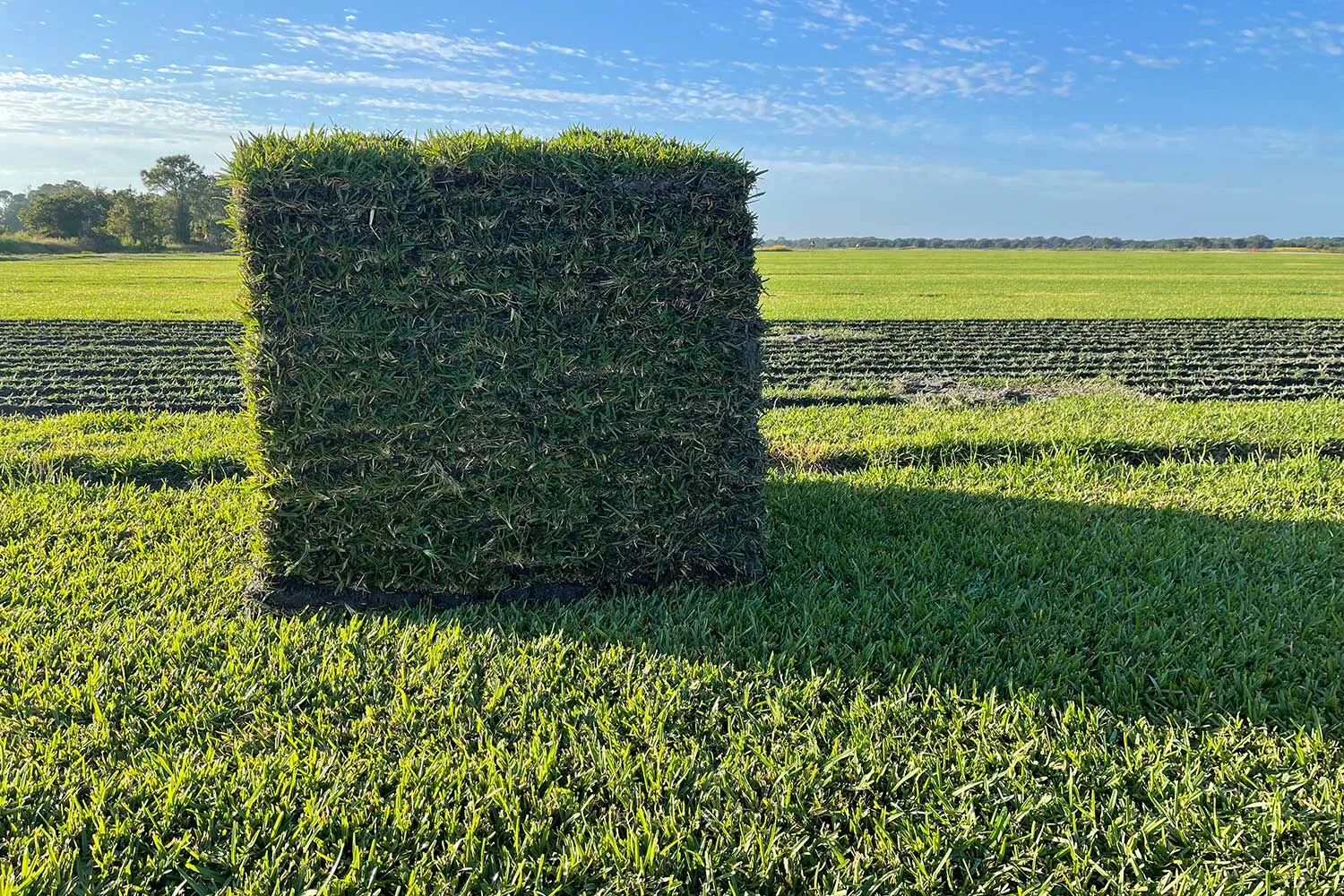
Weeds are opportunists. Every one on this list needs an opening, thin turf, bare soil, standing water, or a scalped patch, and the most effective control in a St. Augustine or zoysia lawn is a canopy dense enough that seeds never see light. Herbicides repair the gaps; they do not replace the grass. With that said, here are the five, how to know them, and what works on each.
Crabgrass
A summer annual with coarse, light green blades that spread from a center in a low star shape, rooting at the joints. It germinates when soil temperatures reach the mid 50s in late winter and takes over thin, sunny areas by June. Because it is an annual, the play is prevention: a pre-emergent herbicide in February, before germination, and a second application about eight weeks later. Post-emergent products for crabgrass are limited in St. Augustine, which is sensitive to many of them, so read the label for your grass. Mowing at the right height, 3 to 4 inches for St. Augustine, shades the soil and stops most of it before it starts.
Dallisgrass
A coarse, deep green perennial bunchgrass that looks like St. Augustine from a distance and grows in clumps faster than the lawn around it, with tall seed heads a day or two after mowing. It comes back from a thick rhizome, so pulling and mowing do not remove it. Small clumps can be dug out with the root; larger areas are spot-treated with a non-selective herbicide and re-sodded, because there is no selective product that takes dallisgrass out of St. Augustine without harming the grass. Sod the spot rather than waiting for the lawn to fill it, or the dallisgrass comes back first.
Florida Pusley
A low, spreading summer annual with small, light green leaves and clusters of white star-shaped flowers, common in the hottest, driest, thinnest parts of a lawn from June through September. It is shallow rooted and pulls easily by hand when the soil is damp. Where there is too much to pull, a post-emergent herbicide labeled for broadleaf weeds in your grass type works on young plants; mature pusley is tougher. Pusley in a lawn usually means the irrigation is not reaching that spot, so fix the coverage or the weed returns next summer.
Florida Betony
A perennial in the mint family, with square stems, dark green toothed leaves, and a white segmented tuber that looks like a rattlesnake’s rattle, which is where the other name, rattlesnake weed, comes from. It spreads by those tubers and by rhizomes, mostly in the cooler months, and it is the hardest weed on this list to remove because every tuber left in the ground regrows. Repeated post-emergent applications of a broadleaf herbicide labeled for St. Augustine, in fall and again in spring, wear it down over two seasons; a pre-emergent in fall slows new plants. Do not till it, which spreads the tubers.
Dollarweed
A perennial with round, bright green leaves an inch across on a stalk from the center, like a small lily pad, and it grows where the lawn is wet: low spots, overwatered zones, and along downspouts. It spreads by rhizomes and seed. A broadleaf herbicide labeled for dollarweed in your grass type controls it, but the lasting fix is water. Cut irrigation back to what the lawn needs, correct low spots that hold water, and dollarweed loses the conditions it depends on. If it is spreading in a lawn that is not being overwatered, check for a leaking irrigation line.
What Works on All Five
Mow tall and often, never taking more than a third of the blade, so the grass shades the soil. Water deeply and less often once the lawn is established; wet surfaces grow pusley and dollarweed. Feed according to a soil test, not a calendar. Read every herbicide label for your grass, because several common products damage St. Augustine. And where a weed has won a patch outright, re-sod it: a piece of Floratam or EMPIRE Zoysia from the farm store closes the gap faster than anything sprayed on it.
Bayside Sod’s Turf Care plans include pre-emergent and post-emergent weed control on a schedule built for Manatee and Sarasota County lawns. For sod to repair a patch, request a quote or call (941) 702-1746.