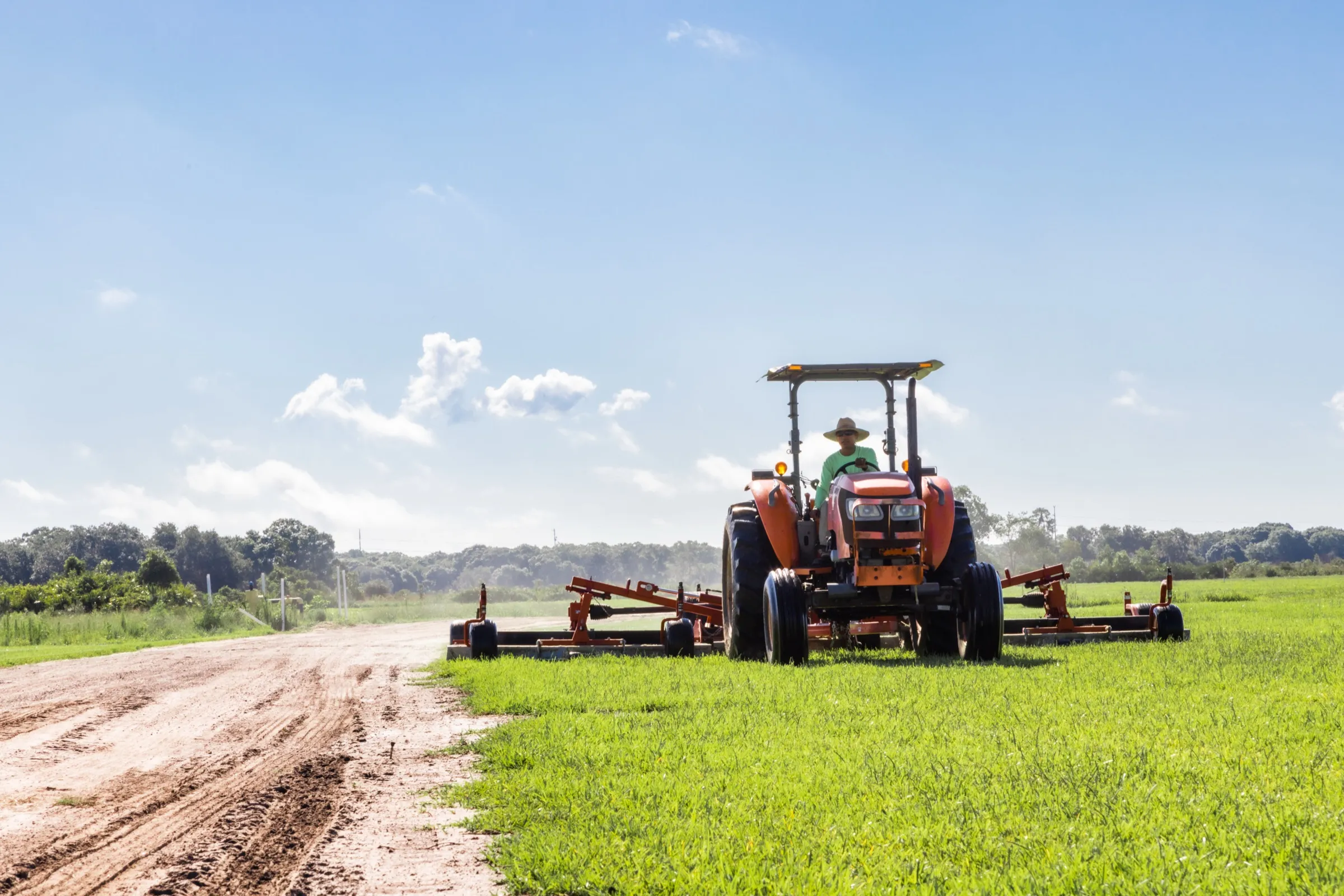
Fall (September to November): Prevent, Do Not Feed
Fall is when the two biggest mistakes get made: fertilizing and overwatering a lawn that is slowing down. Once soil temperatures fall toward 70 degrees, warm-season grass stops using nitrogen and large patch starts using it, so the last nitrogen application of the year should be early in the season, if at all, and only what a soil test calls for. Potassium in fall is the exception; it hardens the grass for winter.
Water less as the weather cools, early in the morning, and under the current restrictions that means one day a week by address. Keep mowing as growth slows, at 3 to 4 inches for St. Augustine and 1 to 2 for zoysia, and rake or mulch leaves before they mat. Fall is also the fungicide window for lawns that had large patch last year, and a pre-emergent in October heads off winter annual weeds.
Fall is hurricane season’s second half. If a storm hits, get the water off the lawn, find out what is dead with the tug test, flush salt where surge reached, and re-sod once the ground drains; our guide to how hurricanes affect soil covers the order.
Winter (December to February): Rest It
Gulf Coast winters are mild, and St. Augustine and zoysia slow down without going fully dormant unless a frost hits. Raise the mower a notch and mow only when the grass needs it. Water once a week or less; a lawn that is not growing does not need more, and wet winter soil feeds fungus. Walk the lawn every couple of weeks for pests, which are few in winter, and for large patch rings, which can appear in any cool, wet spell.
Be careful with herbicides in winter. Several products sold for winter weeds damage St. Augustine, and a lawn that is barely growing recovers slowly. Read the label for your grass, and spot-treat rather than blanket-spray. Late February, when soil temperatures climb into the mid 50s, is the time for the pre-emergent that stops crabgrass.
Spring (March to May): Wake It Up Carefully
As days lengthen, the grass starts growing again and so does everything else. Mow at the normal height from the first cut and never remove more than a third of the blade; scalping a spring lawn opens it to weeds for the season. Wait to fertilize until the lawn has been growing for a few weeks, usually April on the Gulf Coast, and feed to the soil test.
Spring is the season for aeration on compacted or thatchy lawns, for the second pre-emergent application about eight weeks after the first, and for tackling broadleaf weeds while they are small; see our guide to the most common lawn weeds. Water deeply and infrequently to push roots down before summer, within the one-day-a-week rule. Spring is also the driest stretch of the year here, so check the irrigation system for coverage and leaks before June.
Summer (June to August): Water Early, Watch for Pests
Summer rain does much of the watering, and the rest goes on early in the morning so the grass dries by midday. New sod is the exception: it needs daily water for its first 30 days, and every county in our area allows that under a registered establishment variance. Our guide to caring for new sod in summer has the schedule.
Heat brings the insects. Chinch bugs work the hottest, sunniest St. Augustine; sod webworms feed at night from late spring through fall. A soap flush over the edge of a spreading brown patch tells you which you have. Keep mowing at the top of the height range so the grass shades its own roots, and keep foot traffic off the lawn in the hottest part of the day. Mulch beds to hold moisture and keep weeds down around trees and shrubs.
Every Season
Four things do not change with the weather: a soil test once a year, an irrigation check for leaks and coverage, aeration at least once a year on lawns that need it, and a sharp mower blade with the one-third rule. A lawn that gets those four rarely needs the rescue steps above.
Bayside Sod grows the sod and, through Turf Care, keeps it on this calendar for homeowners in Manatee and Sarasota counties: seasonal nutrition from a soil test, weed control, insect and disease prevention. For sod to repair or replace a lawn, request a quote or call (941) 702-1746.