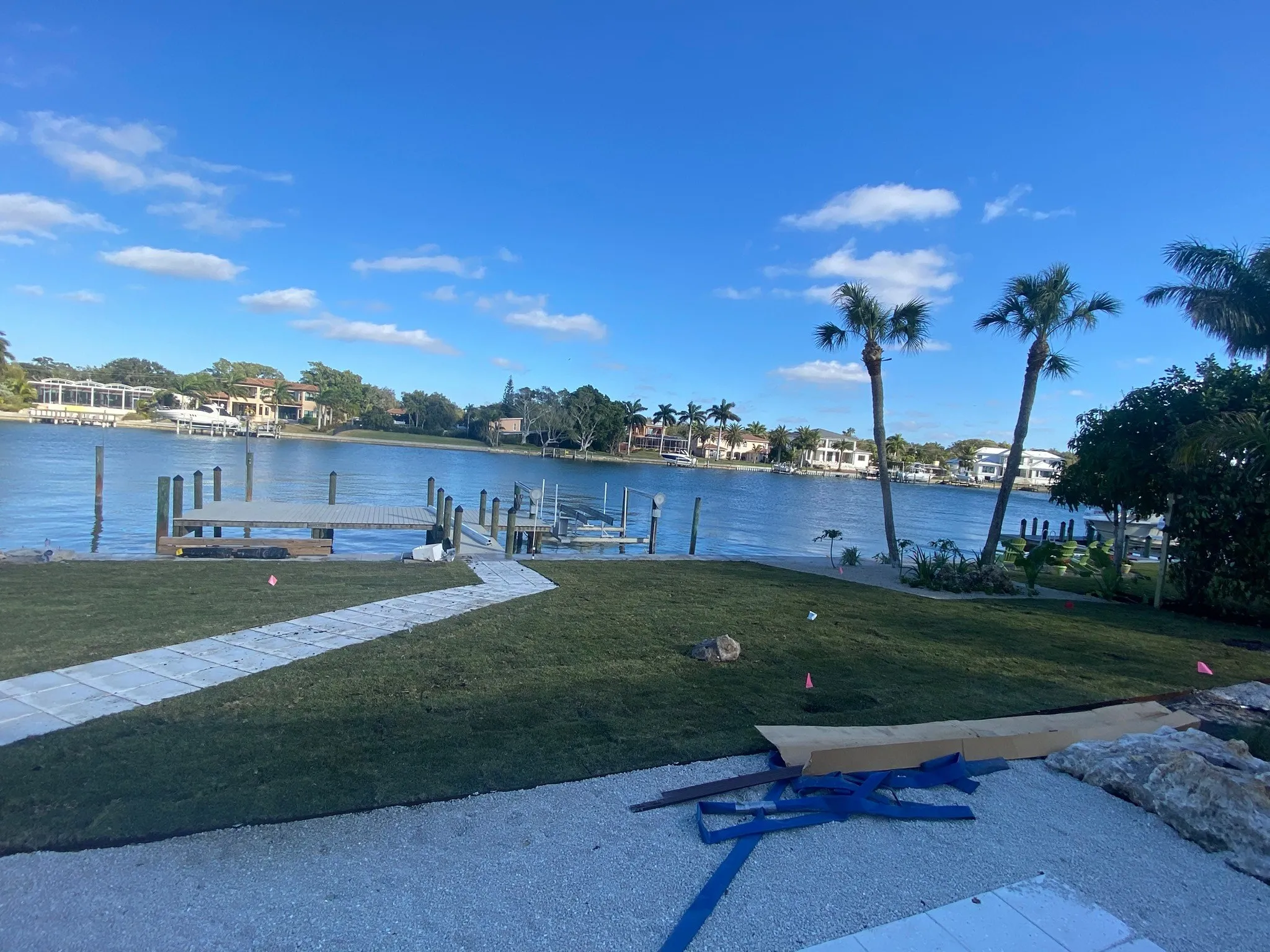
Start With Sod
Sod gives a yard a finished lawn the day it is laid, and in Florida that matters for more than looks. Bare soil erodes in a summer storm; sod holds it. Seed takes months to cover and loses to weeds in the meantime; sod is dense from day one. It also raises what the rest of the landscape can do, because beds, paths, and pools all read against the lawn around them.
Match the grass to the yard rather than the picture. Floratam St. Augustine for sunny, irrigated lawns; Bitterblue or ProVista under oaks; Bimini Bermuda where kids and dogs run; EMPIRE Zoysia for a dense, fine lawn that feels like carpet. Our guide to the three best grasses for Florida lawns walks through the choice.
Landscaping Around a Pool
A pool deck is the hardest place in a Florida yard to grow anything: chlorinated splash, reflected heat, and full sun. Plan it in layers. Hardscape first, pavers or decorative stone for the walkways and the seating area, chosen for a slip-resistant surface. Then plants that tolerate splash and sun and drop little into the water: ornamental grasses, succulents, and coarse tropical foliage rather than fine-leaved shrubs that shed. Palms and larger shrubs set back from the edge give shade and privacy without leaves in the skimmer.
Where the lawn meets the deck, keep a clean edge and choose a grass that handles traffic and heat; Bermuda and zoysia both do. Keep irrigation heads aimed away from the pool, and expect the strip closest to the deck to need the most water in summer.
Native Plants
Florida natives are adapted to the rain, the sand, and the heat, which means less water and less fertilizer once established, and they feed the birds and butterflies that make a yard feel alive. Coontie, firebush, and muhly grass are three that work in almost any Gulf Coast bed: coontie for evergreen structure in shade or sun, firebush for months of red flowers and hummingbirds, muhly grass for a pink haze in October. Group plants by their water needs so the irrigation zones make sense, and mulch the beds to hold moisture and keep weeds down.
Seasonal Color
Flowering annuals give a landscape something new every few months. Marigolds, zinnias, and pentas take the summer heat; impatiens want shade; petunias and snapdragons are for the cool season, October through March, which is when a Gulf Coast bed looks its best. Rotate them with the season rather than fighting the weather, and put the color where you see it from the house and the street, not spread thin across the whole yard.
Outdoor Living Space
Florida weather makes the yard a room for eight months of the year. A patio or deck with real seating, a pergola or sail for shade, and a fire pit or outdoor kitchen if you use them turn a lawn into a place people go. Size the hardscape to how you live: a dining table for six needs about 12 by 12 feet with chairs pulled out. Leave the lawn as the open space the room looks onto; a yard that is all deck loses the thing that made it worth sitting outside.
Water Features
A fountain, a small pond, or a recirculating waterfall adds sound, which covers road noise and makes a small yard feel private, and it draws birds and dragonflies. Site it where you will hear it from the patio, in partial shade so algae stays down, and on a circuit you can turn off; under the current watering restrictions, aesthetic fountains are limited to four hours a day. Plant around it with the same splash-tolerant choices as a pool.
The Order That Works
Grade and drainage first, then hardscape, then irrigation, then sod, then beds and plants. Sod goes in before the beds because the installers need to walk the yard, and because the lawn sets the level everything else meets. If you are planning a yard from scratch, our guide to soil preparation before sod installation covers the ground work, and request a quote or call (941) 702-1746 to get the sod on the schedule.