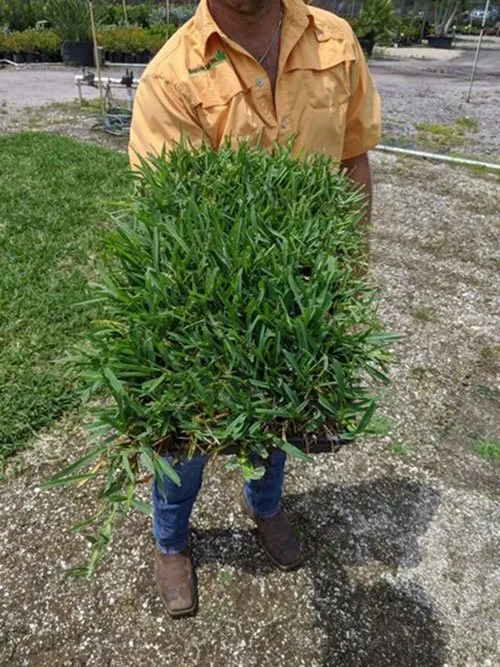
Florida sand does not hold nutrients the way heavier soils do. Rain and irrigation move them through and out, so a lawn that tested fine two years ago can be short of potassium or running alkaline today. A yearly test catches the drift before the lawn shows it, and it is the reason Bayside Sod’s Turf Care plans start with a soil sample rather than a standard fertilizer schedule.
Where to Get a Soil Test in Florida
The UF/IFAS Extension Soil Testing Laboratory in Gainesville tests soil for homeowners statewide. Your county Extension office (Manatee County’s is in Palmetto, Sarasota County’s in Sarasota) supplies the sample bag and form, tells you the current fee, and can walk you through the report when it comes back. Ask for the test that includes pH and the major nutrients for turf.
Take the sample right. Use a clean trowel to pull soil from 3 to 4 inches down at eight to ten spots across the lawn, mix them in a clean bucket, and send about a pint of the mix. Sample a problem area separately; a bare patch under an oak and a sunny front yard are two different soils. Test at the same time each year so the results compare, and always before a new sod installation, when the soil is bare and easy to amend.
Reading the Report
pH. The report gives a number and a target range for the grass you named. Most lawn grasses do best between 5.5 and 7.0; St. Augustine performs best around 6.0 to 7.0 and tolerates a wider range, roughly 5.0 to 7.5, before it struggles. Gulf Coast yards over shell and limestone often come back above 7.5, and the fix, elemental sulfur, works over months. Our guide to soil pH in Florida covers what to do with the number.
Phosphorus and potassium. These are reported as low, medium, or high, with a recommendation in pounds per 1,000 square feet. Florida soils are often high in phosphorus and low in potassium, which matters because potassium drives root depth, drought tolerance, and disease resistance. If phosphorus reads high, use a fertilizer with little or none; Florida’s fertilizer rules already restrict phosphorus for that reason.
Nitrogen is not reported, because it moves too fast in sand to measure meaningfully. The lab gives a nitrogen recommendation based on your grass type instead.
Micronutrients and lime requirement may appear depending on the test. Iron and manganese are the ones that lock up at high pH; a lawn that yellows on alkaline soil is usually short of available iron, not nitrogen.
Acting on It
Follow the report’s rates, not the bag’s. The recommendation is in pounds of nutrient per 1,000 square feet, and the bag lists percentages, so a 16-4-8 fertilizer is 16 percent nitrogen and you divide accordingly; the Extension office will do the arithmetic if you ask. Apply lime or sulfur only when the report calls for it, and retest before repeating. Keep the report; next year’s result is only useful next to this one.
Sod for a Lawn That Is Past Fixing
If the grass is thin and weedy no matter what the soil says, the soil may be fine and the turf simply worn out. A soil test before re-sodding is the best money in the project: amend the bare ground once, lay the new sod on soil that suits it, and the establishment goes faster. St. Augustine, the most common lawn in our area, wants that 6.0 to 7.0 range, a sandy loam that drains, and organic matter worked into the top few inches; Floratam is the standard choice for sunny yards, Bitterblue and ProVista for shade. Our guide to soil preparation before sod installation covers the steps between the test and the sod.
For a soil test with a fertilizer program built from it, see Turf Care; for a sod quote, request one here or call (941) 702-1746.